
What Is an Arizona Liquor License Actually Worth?
Arizona Business Broker · May 20, 2026
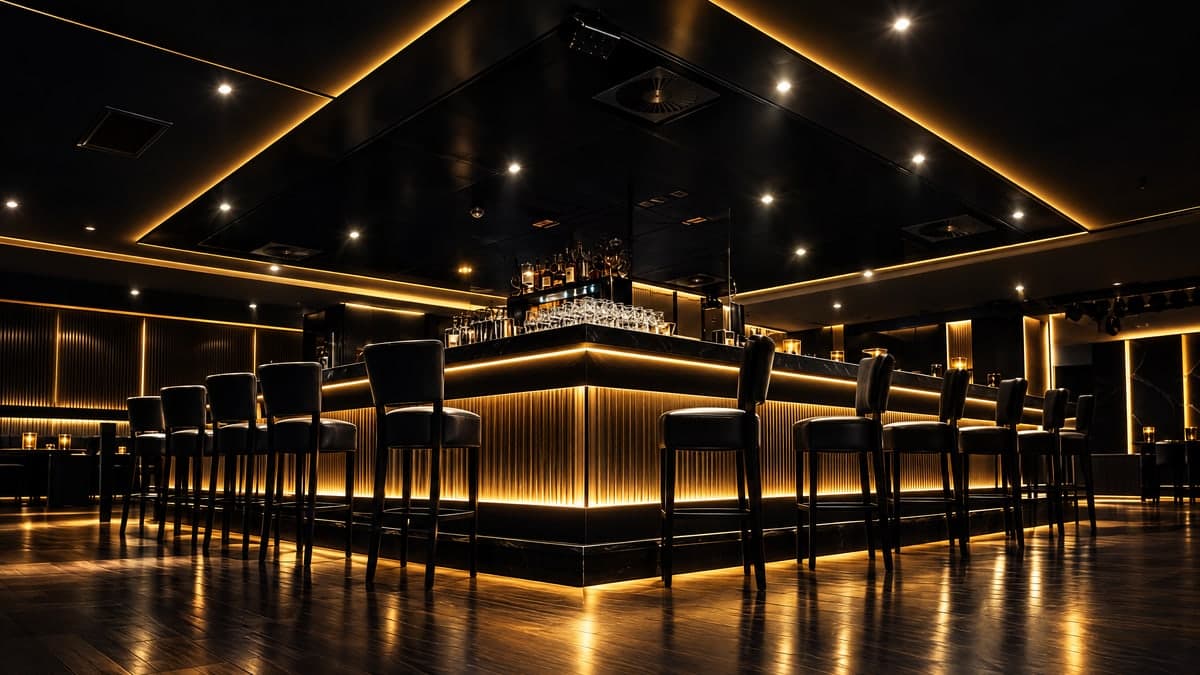
An Arizona liquor license can represent a significant portion of a bar or restaurant's business value. Understanding the differences between license types, transferability rules, and market comparables across Arizona's major metros is essential for any owner considering a sale or buyer evaluating an acquisition.
# What Is an Arizona Liquor License Actually Worth?
When an Arizona bar or restaurant operator contemplates selling their business, the question inevitably emerges: what is the license worth? The answer is neither straightforward nor uniform across the state, but understanding the framework—license type, transferability, and geographic market dynamics—transforms a vague asset into a quantifiable component of enterprise value.
License Types and the Arizona Regulatory Landscape
Arizona's Department of Liquor & Cannabis defines multiple license categories, each with distinct use rights and market values. The Arizona Department of Liquor website lists all active license types and current counts, providing transparency on the regulatory universe in which these assets trade.
The two most common license types for small-business acquisitions are Series 06 (Bar) and Series 12 (Restaurant). A Series 06 license permits the sale of beer, wine, and spirituous liquor for on-premises consumption in a dedicated bar setting. A Series 12 license permits the same products but is issued to an establishment where the primary use is food preparation and service, with alcohol as a secondary revenue stream. This distinction matters profoundly for valuation.
Series 12 licenses typically command higher market value than Series 06 licenses for a single reason: operational flexibility and perceived lower risk. A restaurant with a full food operation and a liquor license generates multiple revenue streams and can weather fluctuations in any single category. A bar without a strong food program lives and dies on alcohol sales and the foot traffic that surrounds them. Lenders, buyers, and investors therefore view a Series 12 as inherently more stable, and the market prices that stability into the license.
Transferability: License Value Is Only Useful If It Moves
A liquor license in Arizona has market value only to the extent that it can be transferred to a new owner. Arizona's Department of Liquor allows transfer of on-premises licenses between entities, but the process is not automatic. The incoming licensee must apply for approval, demonstrating fitness, compliance with local zoning ordinances, and satisfactory completion of the Department's due-diligence review. This gatekeeping step introduces friction—not every buyer is approved, and not every location passes local scrutiny—but it is predictable and manageable.
Some Arizona jurisdictions, notably parts of Phoenix and Tucson, operate quota systems or local caps on the number of licenses that may operate within certain boundaries. These restrictions vary dramatically by neighborhood and city. A license in a quota-restricted zone carries premium value because scarcity drives price. A license in an unrestricted area, while still valuable, may be less defensible at a high multiple because a competing operator could theoretically obtain a new license more easily.
Market Values by Metropolitan Area
Fair market value for a liquor license varies significantly across Arizona's three primary metros: Phoenix, Tucson, and Prescott.
Phoenix Metro
The largest and most active market, Phoenix sees Series 06 licenses typically trading in the $30,000 to $60,000 range, depending on location, neighborhood reputation, and the condition of the underlying business. Prime neighborhoods—Scottsdale, Old Town, downtown Phoenix corridors—command the upper end of that range; suburban or less-trafficked locations may fall below $30,000.
Series 12 licenses in Phoenix often range from $50,000 to $120,000, with full-service restaurants and established multi-unit operators paying premiums. A restaurant license in a high-barrier-to-entry location (limited supply, strong demographics, proven foot traffic) may exceed $150,000.
Tucson Metro
Tucson's market is less dense and considerably less expensive. Series 06 licenses typically range from $15,000 to $35,000. Series 12 licenses range from $25,000 to $75,000, with established full-service operations in the downtown or university-adjacent markets commanding the higher multiples.
Prescott and Northern Arizona
Prescott's market is small and episodic. Licenses trade infrequently and tend to range from $20,000 to $50,000 depending on neighborhood and the overall health of the underlying business. Northern Arizona's smaller metros (Flagstaff, Sedona) follow similar patterns, with scarcity and seasonal traffic patterns exerting strong influence on value.
When the License Becomes the Business
A critical inflection point emerges for sellers and buyers when the sustainable (or seller's discretionary earnings) of the bar or restaurant falls below approximately $75,000 annually. At that threshold, the business generates insufficient cash flow to justify a significant earnout, seller note, or multiple-based purchase price. The buyer is purchasing the license and the physical location, not a demonstrated profit engine.
In these cases, the license value does not drop proportionally with SDE. Instead, it acts as a floor. A bar generating $40,000 in annual SDE is worth perhaps $60,000 to $80,000 as a standalone license in a decent location, plus whatever the buyer might reasonably expect to recover from fixtures, inventory, and goodwill. The license itself represents the opportunity cost of opening a competing business or acquiring one elsewhere.
Conversely, when SDE is strong—$150,000, $200,000, or higher—the license remains a component of enterprise value, but it is not the dominant one. The buyer is paying for the business's cash generation, customer base, and operational systems, with the license as a necessary (but not constraining) asset.
Valuation Methodologies in Practice
Professional business valuators and brokers typically employ one or more of three approaches to estimate liquor license fair market value:
Comparable Sales (Market Approach)
This is the gold standard when data is available. If identical or near-identical licenses in the same geography have sold recently, those transactions set the benchmark. Phoenix metro brokers and the Arizona Department of Liquor maintain no comprehensive public database of closed transactions, so this approach relies on proprietary market knowledge, closed deal surveys, and informal networking among practitioners.
Income Approach
Some valuators estimate a liquor license's value as a percentage of gross alcohol revenue or as a direct capitalization of the incremental profit margin attributable to the license. This approach works when the business is stable and the alcohol operation is isolable. For a bar, it is straightforward; for a restaurant where alcohol margins are 5–10% of total revenue, it is more subjective.
Cost Approach
The cost to a new entrant to obtain a license by filing an original application (where permitted) or acquiring one on the open market sets a ceiling. Most new applicants in Phoenix and Tucson will face multi-month approval timelines and the risk of rejection if a location does not conform to local ordinance. The cost in time, uncertainty, and professional fees (attorney, Department consultation) often justifies paying a premium on a seasoned, approved license.
Negotiating License Value in a Deal Structure
From a practitioner's perspective, liquor licenses often feature prominently in deal negotiation precisely because they are hard to replace. A buyer who needs a license quickly, and for whom obtaining a new license is uncertain or prohibited by local quota, has limited alternatives and will bid accordingly. A seller who understands that a buyer faces this constraint will be positioned to extract more value from the license relative to other business assets.
Some transactions segment the purchase: the license transfers at a negotiated price, while the fixtures, inventory, and goodwill roll into a separate valuation and payment schedule. This segmentation can reduce tax friction and allow parties to negotiate each asset class on its own merit.
"A liquor license in Arizona is only worth what a qualified buyer will pay for it in your market, and that amount depends as much on local zoning and quota rules as it does on the financial performance of the business," says Eddy Roche, Associate Broker at HUB AZ Brokers | Sunbelt Business Brokers.
Making the Valuation Practical
For any Arizona business owner or buyer evaluating a bar, tavern, or restaurant transaction, the practical steps are these:
1. Identify the license type (Series 06, Series 12, or other) and confirm it is in good standing with the Arizona Department of Liquor.
2. Research the local regulatory environment: Are there quota restrictions? How many comparable licenses have transferred in the past 24 months? What were the apparent price ranges?
3. Compare to recent closed transactions in the same metro and neighborhood category. This requires some detective work—closed deal data is not public—but it is the most reliable valuation anchor.
4. Factor in the underlying business performance. If SDE is strong, the license is one component of a healthy enterprise value. If SDE is weak, the license may well be the primary asset being acquired.
5. Consult a broker or valuator with active market knowledge in your specific geography. Arizona's liquor license market is local, and statewide generalizations often mislead.
The liquor license is not a commodity. Its value is rooted in location, regulation, and the buyer's specific circumstances. Understanding that framework—and working with advisors who track actual transaction data in your market—is the difference between a well-structured transaction and an ill-informed one.
If you are an Arizona business owner or buyer evaluating a hospitality transaction, BizSalesGuy.com is here to guide you through the valuation, structuring, and brokerage process in the Phoenix metro and across the state.
Related reading: Arizona business valuation, selling a bar in Arizona, Arizona Associate Broker at Sunbelt, and how long it takes to sell a business in Arizona.
Frequently Asked Questions
What is an Arizona Series 6 liquor license worth?
In the Phoenix metro, Series 06 bar licenses typically trade in the $30,000 to $60,000 range. Prime neighborhoods like Scottsdale, Old Town, and the downtown Phoenix corridors command the upper end, while suburban or less-trafficked locations may fall below $30,000. Tucson runs $15,000 to $35,000, and Prescott licenses trade infrequently in the $20,000 to $50,000 range. Location, quota restrictions, and the health of the underlying business drive where a specific license lands.
Does the liquor license transfer when a bar sells?
Arizona allows transfer of on-premises licenses between entities, but it is not automatic: the incoming licensee applies for approval, demonstrating fitness, compliance with local zoning, and completion of the Department's due-diligence review. The process is predictable and manageable, and in quota-restricted zones that scarcity is exactly what makes the license valuable.
Who handles bar and restaurant sales with liquor licenses in Phoenix and Prescott?
I do. Eddy Roche, Associate Broker at HUB AZ Brokers | Sunbelt Business Brokers, working the Phoenix metro and Prescott. I broker the business and the license as one transaction, from valuation through the Department transfer. Browse current listings at bizsalesguy.com/listings or get in touch at bizsalesguy.com/contact.
Eddy Roche is an Arizona business broker at Sunbelt. Request a free, confidential valuation.
Get seller guides in your Google feed — add BizSalesGuy as a preferred source.