Auto Repair Shops in Arizona: A Strong Multiple, a Hard Transition
Arizona Business Broker · August 2, 2026
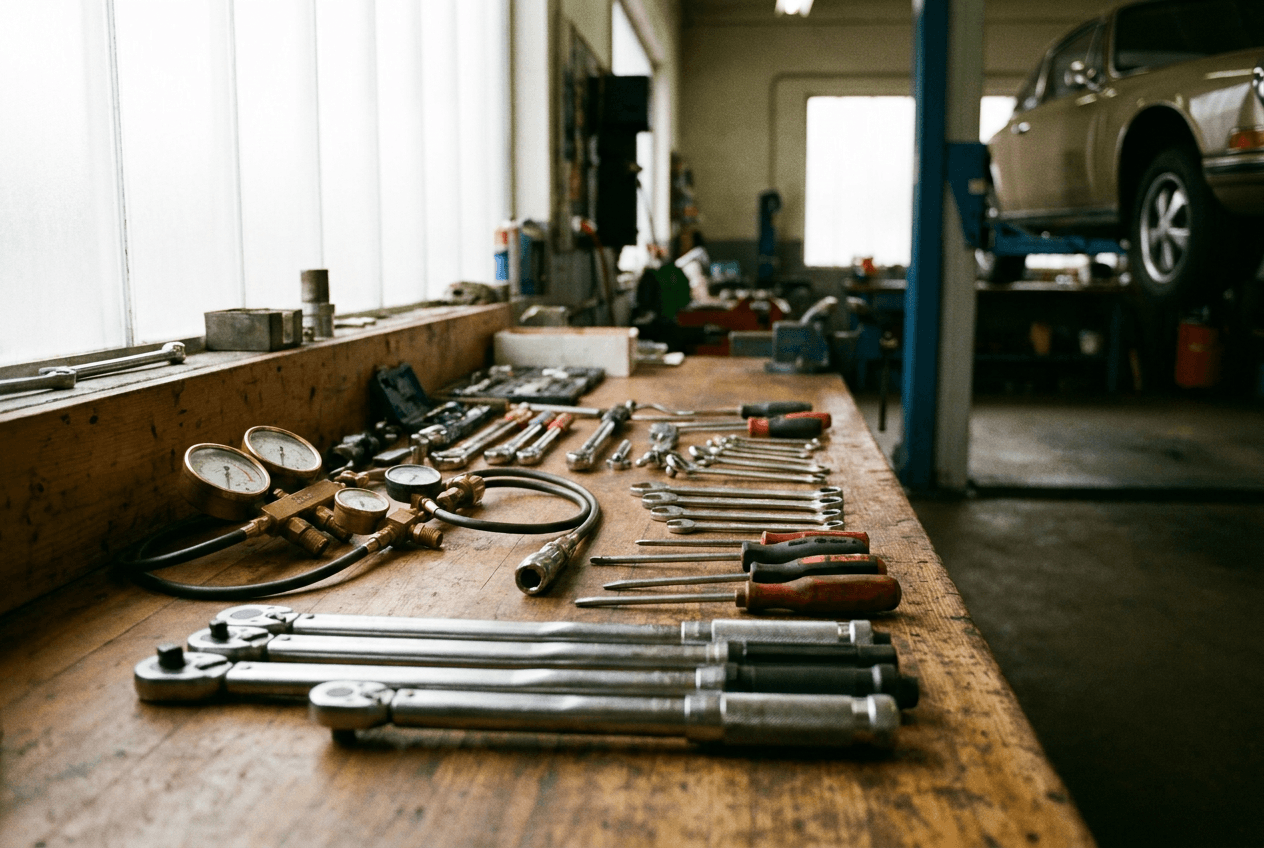
Auto repair shops in metro Phoenix command solid multiples of 2.5–3.5x SDE, but their sale difficulty lies not in price, but in owner transition. The business relies on personal relationships between the owner-mechanic and customers, making earnout structures and rigorous due diligence critical to a successful handoff.
Auto Repair Shops in Arizona: A Strong Multiple, a Hard Transition
When an auto repair shop owner in the Phoenix metro decides to sell, the valuation math is relatively straightforward. Why, then, do so many of these deals stall or fall apart?
The answer lies not in price, but in the transition itself. While auto repair operations consistently trade at 2.5–3.5x SDE in Arizona—a respectable multiple by any standard—the real challenge is that customers don't buy parts from a shop; they buy trust from an owner-mechanic they've known for years. A buyer who walks in with a new face and a new name inherits buildings, tools, and a customer ledger, but not the relationships that filled the service bays.
This article explores how Arizona auto repair owners and brokers navigate that paradox: strong valuations paired with notoriously hard transitions, and what earnout structures and due diligence practices can bridge the gap.
The Arizona Auto Repair Market
Arizona's automotive repair sector is substantial. According to [data from the Bureau of Labor Statistics](https://www.bls.gov/cew/), Arizona's auto repair and maintenance workforce continues to reflect steady employment across the state, with Phoenix-area shops representing a significant portion of that activity. The repair industry is recession-resistant, serves both owner-operated vehicles and fleet customers, and benefits from Arizona's year-round driving season.
Locally, independent repair shops—particularly those specializing in general maintenance, transmission work, brake service, or diagnostics—command buyer attention. They're profitable, recurring-revenue businesses with relatively low startup costs for buyers entering the trades. That appeal drives the 2.5–3.5x SDE multiple across metro Phoenix, placing these shops squarely in the "attractive acquisition" category for both individual buyers and small consolidation platforms.
The challenge: that multiple assumes a smooth handoff of the customer base.
Why the Owner Relationship Dominates Customer Retention
Unlike a restaurant (which sells a dining experience) or a retail store (which sells inventory and ambiance), an auto repair shop sells competence and reliability under pressure. A customer's car breaks down; they need it fixed promptly, fairly, and without surprises. Over time, they trust *this owner*—his judgment, his honesty, his willingness to stand behind his work.
When ownership changes, that trust evaporates. A buyer inheriting a 15-year-old customer list discovers that half those accounts are actually the owner's personal relationships. They may or may not follow the new owner. High-value fleet accounts—the profitable ones—are particularly vulnerable to defection because they have options and have built relationships with the outgoing owner at the decision-maker level.
Add in the operational reality: auto repair is labor-intensive and skill-dependent. Customers know individual mechanics by name. If the owner-mechanic is also the head technician (common in smaller shops), the transition is even sharper.
Earnout Structures: Bridging the Transition
Savvy sellers and brokers address this risk head-on using earnout agreements, typically structured over 6–12 months.
The typical earnout formula ties a portion of the purchase price—usually 15–30% of the deal value—to post-closing performance metrics. Common metrics include:
- **Customer retention targets** (e.g., 80% of pre-close gross revenue in Year 1, measured monthly or quarterly) - **Fleet account continuation** (specific large accounts must remain active with minimum revenue thresholds) - **Labor margins or job margins** (ensuring the buyer maintains the owner's pricing and work quality)
The structure keeps the seller involved during the critical first year. Often, the selling owner agrees to:
- Remain on site part-time (2–3 days per week) for 6 months, then phase out - Be available on call for customer questions or relationship management - Introduce the buyer to major fleet accounts and sit in on those first few meetings - Train the buyer on pricing, workflow, and customer communication practices
From a cash-flow perspective, the earnout usually vests monthly, with final settlement at the 12-month mark. This gives both parties skin in the game: the seller is motivated to ensure a real transition happens, and the buyer knows the seller has a financial reason to help customer retention succeed.
What Buyers Must Verify in Due Diligence
Any buyer pursuing an auto repair acquisition should demand granular detail on customer composition and stability:
**Customer concentration.** How many customers generate 50%, 75%, and 90% of revenue? If one or two fleet accounts represent more than 30% of revenue, the deal is riskier. Request contracts, auto-renewal terms, and the decision-maker's relationship with the seller.
**Historical customer churn.** Ask for 36 months of customer counts and revenue. Has the shop been losing customers, or is the base stable? A shop that's been steady or growing under the seller may simply be stable, but one showing decline may indicate deeper service or pricing issues.
**Technician and staff continuity.** Who are the top three technicians? Are they owner-mechanic, or are they employees? If employees, what's their tenure, compensation, and likelihood to stay post-acquisition? If they leave, customer defection accelerates.
**Pricing and work-order detail.** Request 12 months of detailed work orders, job costs, and pricing. Is the shop's reputation built on fair pricing and high quality, or on low margins? Buyers often reduce prices to undercut the prior owner and gain customers—a move that destroys profitability within months.
**Equipment condition and asset value.** Auto repair is tool-heavy. Confirm that lifts, diagnostic equipment, and shop tools are in working order and modern enough to stay competitive. An inherited fleet of outdated equipment can signal that the shop has been under-invested, which may manifest in customer complaints post-closing.
**Lease or lease-assignment terms.** Does the shop own its location, or does it lease? If lease, what's the remaining term, and does the landlord require consent to assign? A 2-year lease remaining on a 6-year-old business is a serious risk; a 10-year lease with good terms is an asset.
Earnout Clawback Risk and Contingencies
Earnout structures also require protective language. What happens if the buyer deliberately reduces prices to gain market share, or lets a key technician go?
Common protections include:
- **Performance definitions.** Define "customer retention" precisely (same customer, same dollar volume, or just account activity?) to prevent disputes. - **Seller cooperation clause.** Require the buyer to maintain pricing, staffing, and service standards during the earnout period. - **Dispute resolution.** Establish who reconciles the numbers, how often, and what happens if there's a dispute (third-party auditor, binding arbitration, etc.). - **Recapture or buyout provisions.** Some deals allow the buyer to buy out the earnout early (for a discount) if revenue targets are tracking well, or allow the seller to take a lump-sum reduction if a major customer leaves through no fault of the buyer's.
Eddy Roche, Associate Broker at HUB AZ Brokers | Sunbelt Business Brokers, notes: "The earnout isn't punitive—it's a tool to align incentives. A seller who stays engaged for six months, introduces customers, and helps the buyer understand the operation gives both parties a much higher chance of closing the deal and a cleaner transition afterward."
The Practical Takeaway
Auto repair shops in metro Phoenix are stable, profitable businesses that trade at solid multiples. Buyers and sellers who treat the transition as a structural problem rather than a relationship problem tend to succeed.
For sellers: build in 6–12 months of earnout, remain available, and treat your customer relationships as a genuine asset transfer—not just a list.
For buyers: run thorough due diligence on customer stability, technician retention, and lease terms. Confirm pricing and margin assumptions, and negotiate seller involvement seriously. An extra three months of part-time owner presence is worth far more than a 2% discount.
For both: document the earnout terms clearly, define metrics precisely, and establish dispute resolution up front. The smoother the transition, the better the outcome for everyone.
If you're considering a sale or acquisition of an auto repair operation in the Phoenix metro, [BizSalesGuy.com](https://www.bizsalesguy.com) can help you navigate valuation, due diligence, and transition planning with brokers who understand the local market and the nuances of service-based transitions.
Frequently Asked Questions
What multiple do auto repair shops trade for in Phoenix?
Auto repair shops in metro Phoenix typically trade at 2.5–3.5x SDE (Seller's Discretionary Earnings). This range reflects the stability and recurring revenue of the business, though the multiple can vary based on customer concentration, technician quality, and lease terms.
Why are auto repair shop transitions so difficult?
Customers trust the owner-mechanic personally—his judgment, honesty, and willingness to stand behind work. When ownership changes, that trust doesn't automatically transfer to the new owner. Fleet accounts and high-value customers are especially vulnerable to defection.
How long should an earnout last?
Most auto repair earnouts run 6–12 months, with payments tied to customer retention, fleet account continuation, or revenue targets. A 6-month earnout typically phases out the seller, while 12 months covers a full seasonal cycle and allows time to solidify relationships.
What due diligence matters most when buying an auto repair shop?
Verify customer concentration (how many customers make up 50% or 75% of revenue), historical churn trends, technician and staff retention, work-order margins, equipment condition, and lease terms. High concentration in a few fleet accounts or key technicians dramatically increases post-acquisition risk.
Thinking about buying or selling a business in Arizona?
Eddy Roche is an Associate Broker at Sunbelt Business Brokers. He covers the full Phoenix metro and Prescott market.