How Restaurants Are Valued in Arizona: SDE Multiples and What Sellers Should Expect
Arizona Business Broker · August 24, 2026
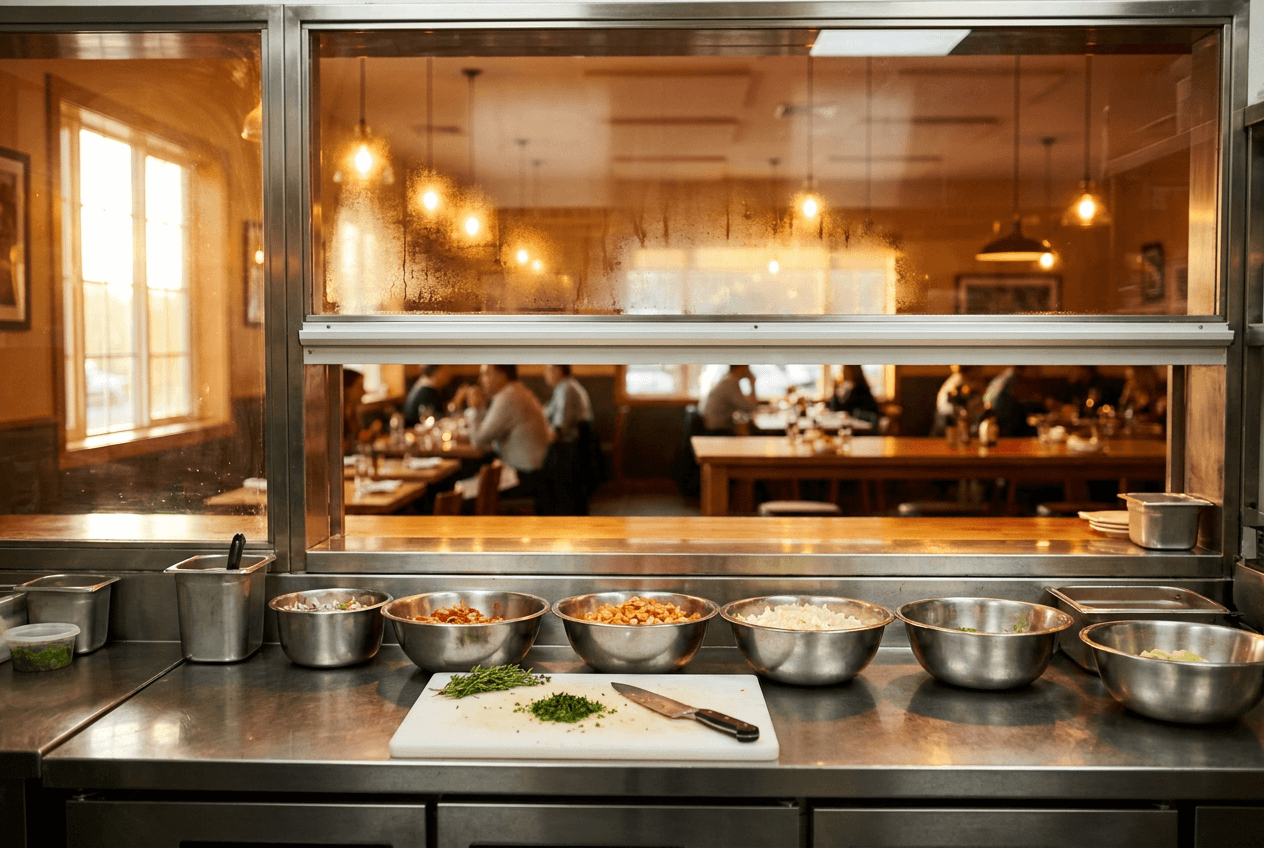
Arizona restaurants trade at SDE multiples of 2.0x to 4.0x depending on concept type, profitability, and owner dependency. Learn how liquor license fair market value influences valuation and when asset-sale structuring applies.
When you're selling a restaurant in Arizona, the valuation question always comes down to the same place: what multiple of seller's discretionary earnings (SDE) will a buyer pay?
Unlike asset-based businesses—where you simply total equipment, inventory, and goodwill—restaurant valuation hinges on profitability. And unlike some service businesses, restaurants face a unique constraint: the liquor license. That single asset can anchor or even override an SDE multiple when earnings are thin.
This article walks you through how Arizona restaurants actually trade, what multiples you should expect based on concept type, and what happens when the liquor license is worth more than the business's earnings support.
The Arizona Restaurant Industry and Valuation Context
Arizona restaurants employ thousands of people and generate significant economic activity. [According to the Arizona Restaurant Association](https://www.azrestaurant.org/), the restaurant industry represents a major employment and revenue driver across the state. Understanding the broader market context helps sellers and buyers alike recognize that restaurant valuations aren't arbitrary—they reflect a competitive, mature market with established buyer expectations.
The typical buyer of an Arizona restaurant is either an owner-operator stepping up to a larger concept, a multi-unit operator expanding into new territory, or a semi-absentee investor seeking a stable cash business with professional management already in place. Each buyer type applies slightly different valuation logic, but all begin with one question: what is the sustainable, seller's-adjusted earnings power of this business?
The SDE Multiple: Why Restaurants Trade Lower Than You Might Think
Seller's discretionary earnings—the profit available to an owner after reasonable operating expenses and owner compensation—is the standard metric for valuing small to mid-market restaurants in Arizona. SDE includes the owner's salary (even if they work for free), add-backs for owner-paid meals and travel, and adjustments for one-time or non-recurring costs.
Most Arizona restaurants trade at a 2.0x to 3.5x SDE multiple. This might seem low compared to other business categories, and there's a reason: restaurants operate on thin margins, carry significant labor and food cost volatility, and are heavily operator-dependent. A buyer paying 4x SDE for a restaurant is betting that the management team, systems, and customer relationships are durable. A buyer paying 2x is betting that the concept is commodity-like or that the market is softening.
The specific multiple depends on concept type:
**Bars and high-liquor-revenue concepts** typically trade near the lower end: **2.0x to 2.5x SDE**. These businesses are simpler to operate, less dependent on chef or owner personality, and easier to scale with new staff. A dive bar or casual cocktail lounge with consistent traffic and predictable pour costs attracts buyers who treat the business as an income play, not a turnaround.
**Full-service casual dining** (family restaurants, theme concepts, neighborhood Italian or Mexican spots) trades in the **2.5x to 3.5x range**. These concepts require stronger management, more complex food cost control, and higher customer-experience sensitivity. A buyer pays more because execution matters—and so does the owner's reputation and customer relationships.
**Higher-end or service-intensive concepts** (fine dining, specialized cuisines, chef-driven concepts with strong local reputation) can trade at **3.0x to 4.0x SDE** or higher. A buyer is paying for the chef, the brand, the clientele, and the perceived stability of a differentiated offering.
**Quick-service and fast-casual** concepts depend heavily on location and brand. A franchise QSR might trade at 2.5x to 3.0x; an independent, high-traffic fast-casual in a strong location might reach 3.5x to 4.0x.
The Liquor License: The Invisible Asset That Changes Everything
Here's where Arizona restaurant valuations diverge sharply from the SDE-multiple playbook.
Arizona's liquor license—issued and regulated by the [Arizona Department of Liquor Licenses and Control](https://azliquor.gov/)—is a scarce, valuable asset. The department sets fee schedules and controls the issuance of new licenses, making transfers of existing licenses highly competitive. In strong Phoenix-metro markets (Scottsdale, north Tempe, Paradise Valley), an on-premises liquor license can independently command $50,000 to $150,000 or more, depending on location and supply.
When evaluating a restaurant sale, appraisers and brokers must answer this question: what is the fair market value (FMV) of the liquor license?
If the restaurant's SDE-based valuation yields a business value that falls *below* the liquor license FMV, the deal often restructures as an **asset sale**, where:
- The buyer purchases the liquor license, furniture, fixtures, and equipment as separate line items - The seller may retain or dispose of the operating lease (depending on terms) - The transaction values the license at or near its independent FMV, and the business operations are priced separately or written off as nominal goodwill
**Example scenario**: A neighborhood bar generates $80,000 SDE annually. At a 2.2x multiple, that's $176,000 in business value. But the liquor license, in a high-demand neighborhood near Scottsdale, has an independent FMV of $120,000. A savvy buyer structures the deal to isolate the license value—paying $120,000 for the license, maybe $30,000 for FF&E, and writing the remaining $26,000 as a transition or goodwill payment. The seller still exits, but the architecture of the deal has shifted to reflect the true asset values.
This is where working with a broker who understands Arizona's liquor license market becomes critical. The [Arizona Department of Liquor Licenses and Control](https://azliquor.gov/) maintains records and fee data, but the secondary-market FMV of existing licenses is set by local supply and demand—and that's where local market intelligence matters.
Why Margins and Owner Dependency Matter
Two restaurants with identical annual revenue can trade at completely different multiples if their SDE profiles differ. A restaurant that nets 15% to 18% SDE (typical for full-service casual) is more attractive at a 3.0x multiple than one that nets 8% to 10% (more typical for high-volume, low-margin quick-service). The buyer is buying dollars, not revenue.
Equally important: owner dependency. A restaurant where the owner is the head chef, the primary host, the unofficial CFO, and the decision-maker on every vendor relationship will trade at a *lower* multiple than an identical restaurant where systems are documented, management is delegated, and the owner has stepped back. That premium for transferability can be worth 0.5x to 1.0x SDE.
"When you're selling a restaurant," says Eddy Roche, Associate Broker at HUB AZ Brokers | Sunbelt Business Brokers, "buyers are really asking two questions: Can I replicate the earnings? And can I do it without the owner staying around? If the answer to either one is unclear, the multiple compresses."
What Sellers Should Expect in the Arizona Market
If you're preparing a restaurant for sale in Phoenix, Scottsdale, Tempe, or elsewhere in Arizona, expect this process:
1. **SDE Recast**: Your broker or accountant will reconstruct your P&L to isolate true operating earnings, adding back owner compensation, one-time costs, and discretionary expenses. Expect questions about every adjustment.
2. **Multiple Assignment**: Based on concept type, margin profile, owner dependency, and market conditions, a buyer (or broker) will propose an initial multiple range. Be prepared to support why your restaurant deserves the higher end of that range.
3. **Liquor License FMV Check**: If your SDE-based value is close to or below the liquor license FMV, expect a conversation about asset-sale structuring. This isn't bad news—it's just a different path to close.
4. **Due Diligence on Replaceability**: Buyers will scrutinize customer lists, employee turnover, supplier relationships, and lease terms. A restaurant that depends on the owner's personality will trade at a discount. One that has systems, training, and a stable team will command a premium.
The Takeaway
Arizona restaurant valuations are formulaic but not simple. SDE multiples of 2.0x to 4.0x reflect buyer expectations for concept type, profitability, and transferability. But the liquor license—an asset unique to regulated hospitality businesses—can significantly influence the overall deal structure and final valuation.
If you're considering a restaurant sale in the Phoenix metro, understanding these mechanics upfront helps you price realistically, position your business credibly, and negotiate from a position of knowledge. Whether you're working with a broker, accountant, or valuation firm, insist that both SDE multiple *and* liquor license FMV are part of the conversation.
[BizSalesGuy.com](https://www.bizsalesguy.com) is here to help Phoenix-metro business owners and buyers navigate valuations, structure deals, and connect with experienced brokers who understand Arizona's unique hospitality market.
Frequently Asked Questions
What SDE multiple should I expect for my Arizona restaurant?
Most Arizona restaurants trade at 2.0x to 3.5x SDE, with bars at the lower end (2.0x–2.5x) and service-intensive or chef-driven concepts at the higher end (3.0x–4.0x). The specific multiple depends on concept type, profitability margin, owner dependency, and current market conditions.
What happens if my liquor license is worth more than my SDE-based business valuation?
When liquor license FMV exceeds the SDE-based valuation, the deal typically restructures as an asset sale. The buyer purchases the license, FF&E, and other assets separately, often paying fair-market value for the license and a smaller goodwill or transition amount for the operating business.
How does the Arizona Department of Liquor Licenses and Control affect my restaurant's value?
Arizona's liquor licensing authority controls the supply of new licenses and maintains regulatory requirements. Because new licenses are scarce, existing licenses hold significant secondary-market value. Local supply and demand—not just department fees—determine what a license is worth in your market.
Why do restaurants trade at lower multiples than other small businesses?
Restaurants operate on thin margins, face significant labor and food-cost volatility, and are often owner-dependent. Buyers perceive higher operational and market risk, which is reflected in lower SDE multiples compared to service businesses or retail operations with more stable, recurring revenue.
Thinking about buying or selling a business in Arizona?
Eddy Roche is an Associate Broker at Sunbelt Business Brokers. He covers the full Phoenix metro and Prescott market.