
Partner Buyout or Outside Sale: Which Pays More
Associate Broker · HUB AZ Brokers | Sunbelt Business Brokers of Arizona · AZ license BR579487000
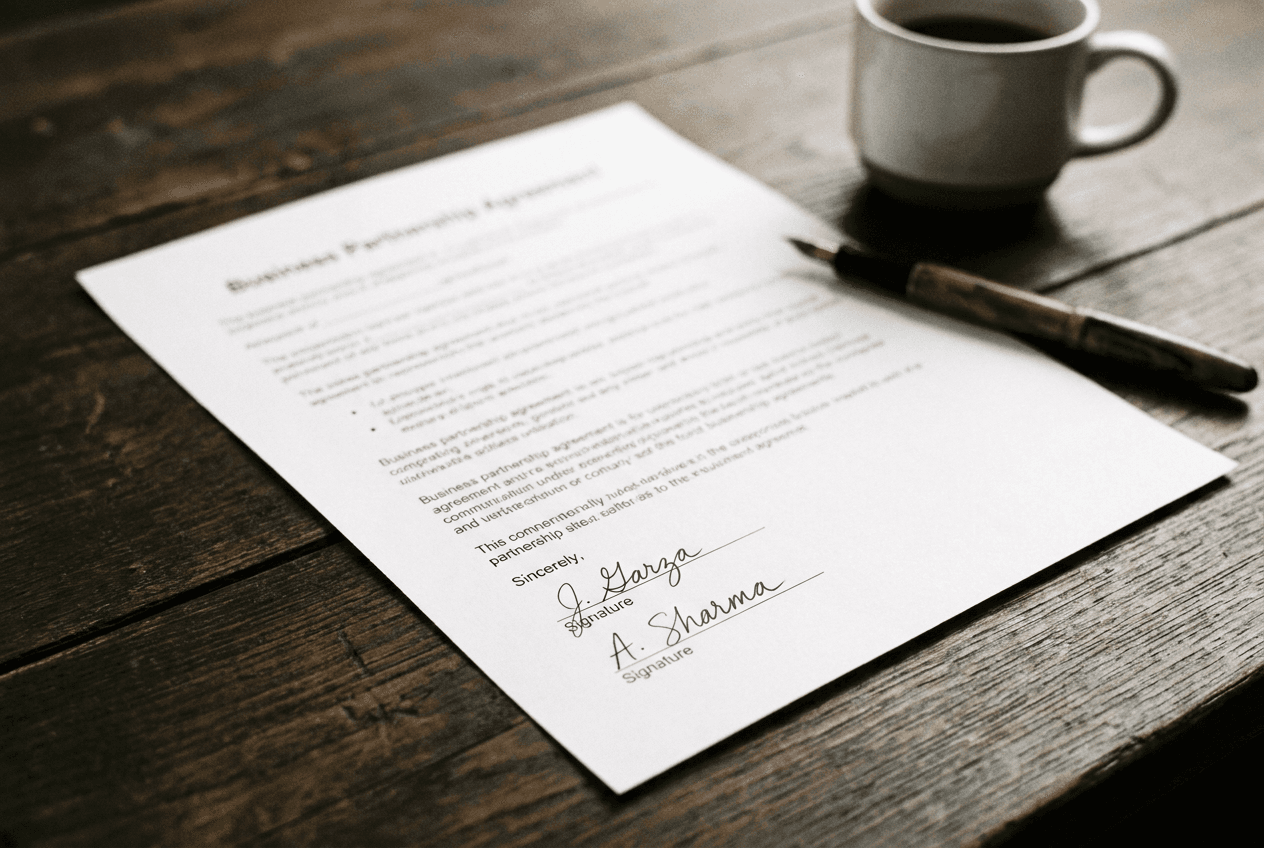
When one partner exits and the other stays, the choice between a buyout and an outside sale depends on tax treatment, financing options, and which path leaves both partners with more cash. Price is only part of it.
When one partner wants to exit and the other wants to stay, most owner teams face the same fork in the road: buy out the departing owner, or sell the whole company to an outside buyer. The decision is not just financial. It involves tax treatment, financing mechanics, and how much cash each partner actually walks away with.
I've seen too many partnerships stall for months because the staying partner and the leaving partner could not agree on a buyout price. The staying partner thinks "I know the business," and the leaving partner thinks "that number is too low." Both end up leaving money on the table because neither moves to the second option: sell everything to an outsider who does not already own equity.
Let me walk through what separates these paths and when selling 100 percent to a third party actually works out better for both.
Valuing a Partnership Interest
The core problem is that a partnership stake and the company's assets are not the same thing. A buyer acquiring your entire company gets the entity itself: the customer list, the brand, the ongoing cash flow, the lease right, maybe equipment and inventory. A partner buying out the other partner is buying only a fractional ownership claim.
That fractional claim has to be valued separately from the asset base. Two partners might agree that the company is worth $1 million. But if Partner A wants out and Partner B wants to buy them out, the price Partner B offers for Partner A's 50% stake will be lower than half of $1 million. Partner B already owns the other 50% and does not need to "buy the company." They need to remove the other owner.
The friction happens because the exiting partner usually assumes the buyout price should be close to their proportional share of the company valuation. It rarely is. A buyout price reflects only the departing equity stake, not control of the whole enterprise.
Tax Treatment: Capital Asset vs. Ordinary Income
The IRS treats a partnership interest sale differently depending on what the business holds and how long the partner owned it. A partnership interest held longer than one year is generally taxed as a capital asset when sold, but any gain tied to unrealized receivables or inventory is taxed as ordinary income. This distinction matters because ordinary income is taxed at higher rates than long-term capital gains.
When you sell your partnership stake to the other partner, you may face ordinary income tax on a chunk of the sale price, even though your capital gains rate would be lower if you sold the whole company to an outside buyer. The inside buyout does not necessarily trigger better tax treatment. In fact, it often creates a worse outcome.
Selling 100 percent to an outside buyer, by contrast, usually allows you and your partner to structure the sale as an asset sale or stock sale, giving you both a single unified tax event. If the buyer is acquiring the whole company, not just a fractional ownership claim, the sale is cleaner from a tax perspective.
Always run the numbers with your CPA before you agree to a buyout price. The tax tail should not wag the deal, but it should inform which path costs you less.
Financing the Buyout: Who Borrows and How
If Partner B wants to buy out Partner A, Partner B has to fund that purchase somehow. The staying partner rarely has enough cash on hand to write a check for half the business value. That means financing.
SBA loans can work here. The SBA 7(a) loan program offers loans up to $5 million and can fund partial changes of ownership. The staying partner, now the borrower, can take out a 7(a) loan to buy out the exiting partner's stake. The business cash flow services the debt, and the staying partner increases their ownership from 50 percent to 100 percent.
But this assumes the staying partner's cash flow and credit can support new debt. If the business is break-even or has thin margins, the 7(a) lender may decline. If the staying partner has weak personal credit or other debt, the lender will want collateral the business might not have. This is where many buyouts stall in reality.
Seller financing can bridge the gap. The exiting partner carries a note for part of their proceeds. But now the exiting partner has become a creditor instead of an owner, and if the business hits trouble, they take the loss. I do not recommend this structure unless the relationship is rock solid and the buyout price is rock-bottom.
When an Outside Sale Pays Both Partners More
Here is the hard truth I have observed across hundreds of deals: outside buyers very often pay both partners more combined than a buyout price would.
An outside buyer is paying for the whole platform: customers, systems, team, market position, and ongoing cash generation. They are not just buying a fractional claim. They are acquiring a functioning business. A multiples-based valuation of the entire company almost always exceeds what one partner can finance to buy out the other.
Let me set this concretely. Suppose two partners own a service business doing $800,000 in EBITDA. If an outside buyer comes in and offers 4 times EBITDA, the company sells for $3.2 million, and each partner walks with $1.6 million (minus transaction costs). Now suppose Partner B tries to finance a buyout of Partner A at 2.5 times EBITDA of Partner A's share (a lower multiple reflecting the inside-only deal): Partner A gets $1 million, and Partner B now owns a business but carries $1 million in new debt serviced from that $800,000 EBITDA. Partner A is short $600,000, and Partner B has not actually improved their position. They traded an equity partner for a lender.
Outside buyers have no problem paying top-of-market multiples because they are buying cash flow and growth optionality. They can afford it because they are taking control of the whole machine. Inside buyouts are constrained by the staying partner's ability to borrow and the business's ability to service that debt.
The Path Forward: Agreement First, Structure Second
Before you and your partner decide which path to take, agree on what the company is actually worth as a whole unit. Use a professional valuation, or at least compare it to recent comps in your industry. Once you have that number, you can model both scenarios: a buyout by the staying partner (and what financing would look like) and a sale to an outside buyer (and what each partner nets after taxes and broker fees).
Most of the time, the outside sale wins. But it only works if both partners agree to explore it, and that means both have to trust the process and the broker running it. The staying partner has to accept that letting go of total control for a larger check makes economic sense. The exiting partner has to believe the broker can actually deliver that outside buyer.
When both partners are aligned on this, I have seen deals close in 90 days that would have taken a year as a buyout negotiation. Check out our guide to SBA financing for business sales if you want to understand more about how an outside buyer would actually fund a purchase. If you are thinking through the mechanics of a sale, how long to sell a business in Arizona walks through the realistic timeline.
"The buyout and the outside sale are not just two options with different prices—they are different businesses entirely. Partners who only negotiate with each other on buyout price are almost always undervaluing the alternative." —Eddy Roche, Associate Broker at HUB AZ Brokers | Sunbelt Business Brokers of Arizona
The decision between a buyout and an outside sale rests on two questions: Can the staying partner actually finance it, and does the outside market value the company higher than the partners do? If the answer to the second question is yes (and it usually is), then selling 100 percent is worth a serious look. Both of you will likely end up with more cash, and neither of you will be managing a years-long tension over price. That clarity alone is worth the conversation. If you are selling a business in the Phoenix metro and want to talk through these options, reach out.
Related reading: Arizona business valuation, asset sale vs stock sale in Arizona, how long it takes to sell a business in Arizona, and SBA financing on Arizona business sales.
Frequently Asked Questions
How is a partnership interest valued differently from the company's assets?
A partnership interest is a fractional ownership claim, not a controlling stake. Its value reflects only the departing partner's share, not the full enterprise value. A 50% stake is not worth 50% of the company valuation in an inside buyout because the staying partner does not need to acquire the business. They need to remove the other owner. Outside buyers pay for the entire platform and cash flow, which usually commands a higher multiple.
Can an SBA loan fund a partner buyout?
Yes. The SBA 7(a) loan program offers loans up to $5 million and can fund partial changes of ownership, including buyouts of departing partners. The staying partner becomes the borrower, and the business cash flow services the debt. However, the lender will evaluate the staying partner's credit and the business's ability to carry the new debt load.
Why is tax treatment different for a buyout versus a sale to an outsider?
A partnership interest held over one year is a capital asset, but any gain tied to unrealized receivables or inventory is taxed as ordinary income, at higher rates. An outside buyer typically acquires the whole company as either an asset or stock sale, often resulting in more favorable unified tax treatment. Always consult a CPA to compare the after-tax proceeds of both scenarios.
What happens if the staying partner cannot secure financing for a buyout?
Many buyouts fail or stall because the staying partner cannot borrow enough. Seller financing (where the exiting partner carries a note) can bridge the gap, but this converts the exiting partner into a creditor exposed to business risk. If neither option works, an outside sale may be the only path forward.
Eddy Roche is an Arizona business broker at HUB AZ Brokers | Sunbelt Business Brokers of Arizona. Request a free, confidential valuation.
Get seller guides in your Google feed — add BizSalesGuy as a preferred source.